How to Boost Your Brand Visibility in AI Searches: A Guide for Brands
People now get answers from AI search tools. Here is how brands can write, structure and maintain content so it is found, understood and cited.
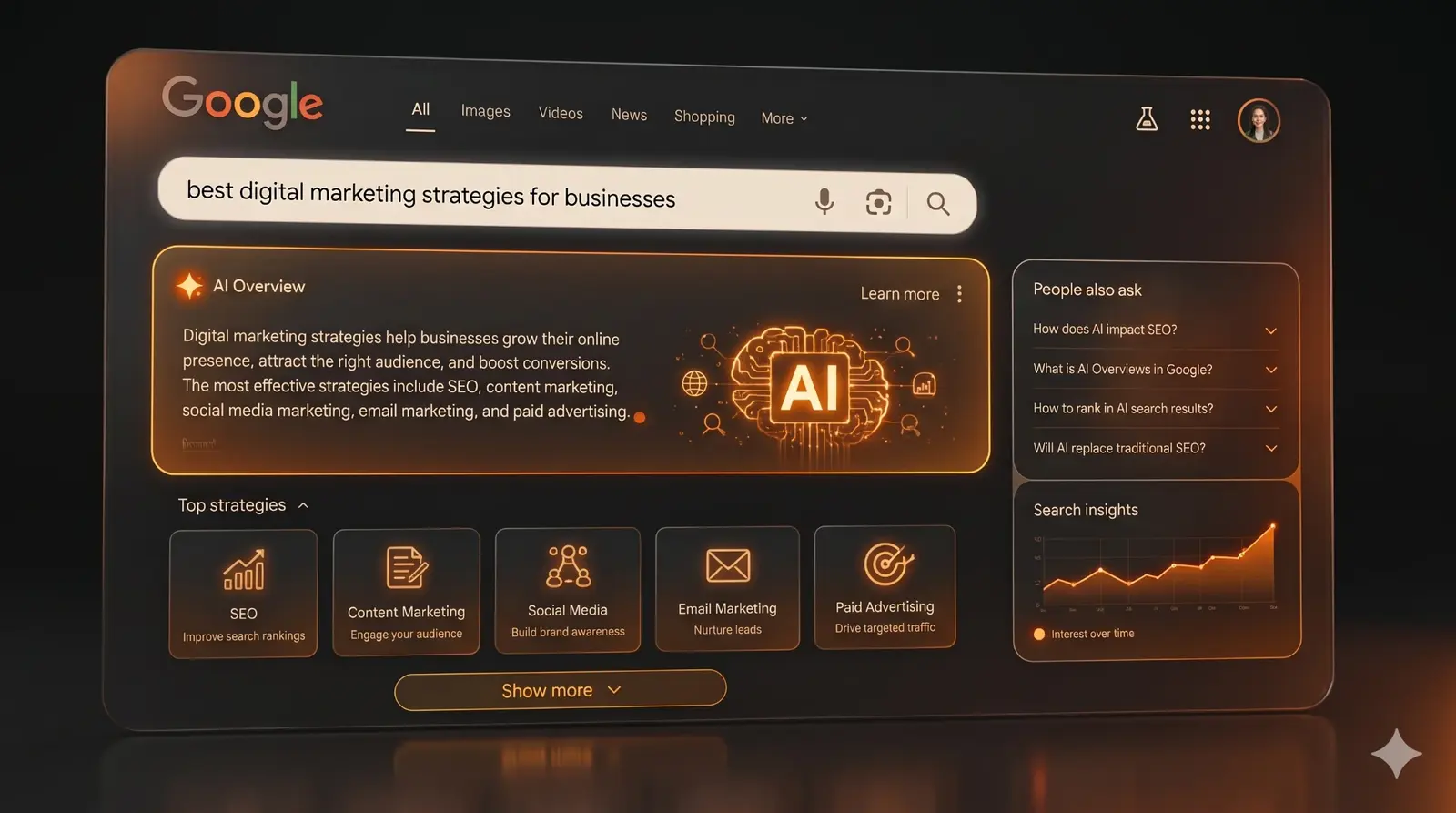
The way people search has evolved. Previously, users typed a phrase into Google and browsed multiple websites looking for answers. Nowadays, many prefer AI-powered platforms such as ChatGPT, Google AI Overviews and other generative search tools to get instant answers, suggestions and explanations.
Writing blogs and using keywords still matters, but it is no longer the only thing brands need to focus on. They also need to think about how people and AI systems find, interpret and cite their site. This is not about writing for machines. The best way is to begin with people. Content that truly solves users' questions, offers valuable information and shows real knowledge and expertise has a better chance of being visible.
So, let's look at what brands can do to optimise their content for this new search landscape without losing the human element.
Understand how AI search engines work
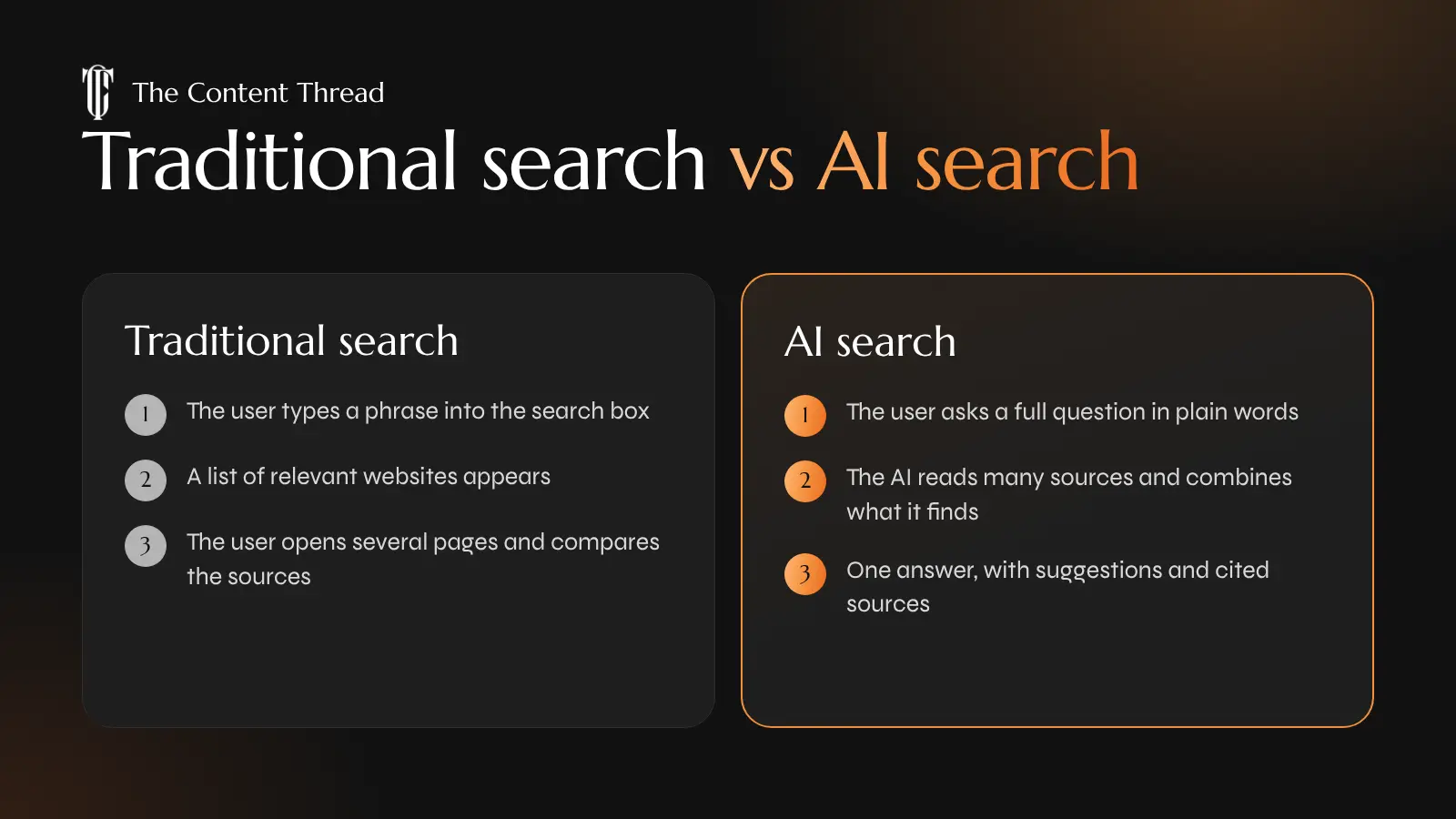
Traditional search engines present a list of websites that are relevant to the query, and users can dig into various sources. AI-powered search is a little different. It analyses information from a range of sources and produces responses that synthesise it.
For instance, if someone is looking for a dependable digital marketing agency, they can get an AI recommendation of agencies and then ask for a comparison or for the differences between them.
This is a new opportunity for brands to increase their visibility in AI search. Brands need to do more than rank high in search results; they need to provide richer information that is relevant and transparent enough for AI to use.
Create content for the questions people actually ask
People don't often go online just because they want to read something. They come with an issue, a problem to solve or a decision to make. It could be a startup founder researching how to build awareness for a new brand on a small budget. It could be the owner of an eCommerce site researching how to turn visitors into buyers.
Brands build deeper connections by speaking to these real issues. Helpful content is the answer. Instead of superficial blog posts full of industry fluff, create content that answers specific questions simply and practically.
Explore these options:
- Describe the common issues your customers face.
- Answer the questions customers frequently ask about your services.
- Give examples and guide the reader through the process step by step.
- Bring in experts and practitioners.
- Explain complicated concepts clearly.
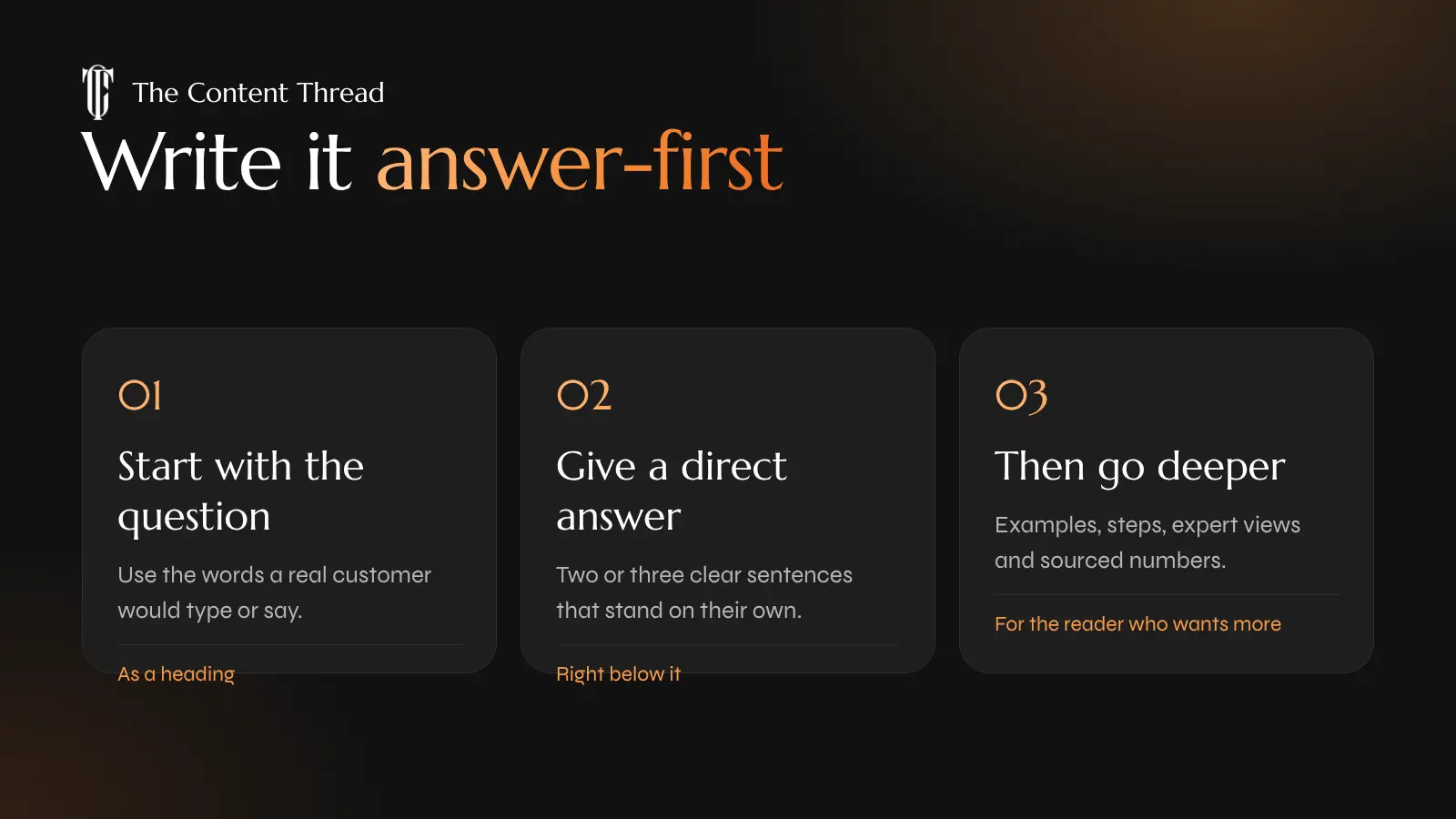
Content that is easy to read, and where the key point is easy to find, is also much easier for AI search to pick up. A reliable pattern is to start with a question, give a short direct answer, and then go into more detail on the topic.
Think in context, not just keywords
People often use related terms when they search. For instance, someone searching for content marketing services may also search for a content agency, brand storytelling solutions or a professional content writer. AI is trained to connect these different terms and give the user what they are looking for.
Generative AI optimisation doesn't mean repeating keywords. It means giving the reader high-quality content. For example, an article about brand storytelling should explain what it is, why it is necessary, how to apply it in marketing activities and what makes brand storytelling compelling. Generative AI optimisation lets you combine traditional SEO techniques with the new opportunities offered by AI.
Build trust with original and reliable information
AI systems draw on a huge amount of knowledge. Simply repeating another blog post with the same advice found everywhere on the internet is not enough to give your brand an edge. It is the perspective in the content that gives it value.
Companies should focus on:
- Sharing original research and field notes.
- Relating stories to real life wherever you can.
- Using statistics from good sources.
- Quoting a peer or another professional in the same field.
- Keeping information up to date.
Trust also comes from consistency. The information on your website, service pages, blogs and business profiles has to keep telling people the same, correct message about your brand. That is why we should think about developing a generative engine optimisation strategy instead of just publishing articles.
Make your website easy to understand
Good content won't help much if search engines cannot find or identify what is in front of them. Make sure the main pages of your site are easy to reach, crawlable and indexable by the right bots.
Structured data can help search engines understand specific details on a page. Google says there are no special schema markup requirements for appearing in its AI Overviews or AI Mode. Similarly, sites that want to show up in ChatGPT search can check whether OpenAI's OAI-SearchBot can access their content (robots.txt). These website improvements also improve the site's SEO and the visibility of its content.
Keep optimising your content for SEO
Writing a blog and not touching it for years is a poor marketing strategy. Make sure you are in the rankings and revisit your blog regularly, because things change over time, such as consumer behaviour, demands and expectations. Go through your previous blogs to see which are doing well and bringing traffic, and which pages have gaps.
Marketers can measure content performance across the search channels available to them, and tools such as Google Search Console help identify gaps. Answer engine optimisation is not only about being present in AI data; it is also about helping customers with useful and credible information. If marketers take a consistent generative engine optimisation approach, they can boost their online presence significantly.
Key takeaways
- AI search combines sources into one answer, so be a source worth using.
- Write for real questions: question first, direct answer, then detail.
- Think in context and topics, not keyword repetition.
- Add original perspective, sourced numbers and consistent facts.
- Keep your site crawlable and your content fresh.
See this approach in real work.
Content Marketing case studies